The long term health risks associated with sleep apnea can be very serious. Failure to treat the condition can result in a greater risk of heart attack, stroke, diabetes, gastric reflux, or high blood pressure. For this reason, it is crucial that you seek sleep apnea treatment as soon as you notice any warning signs.
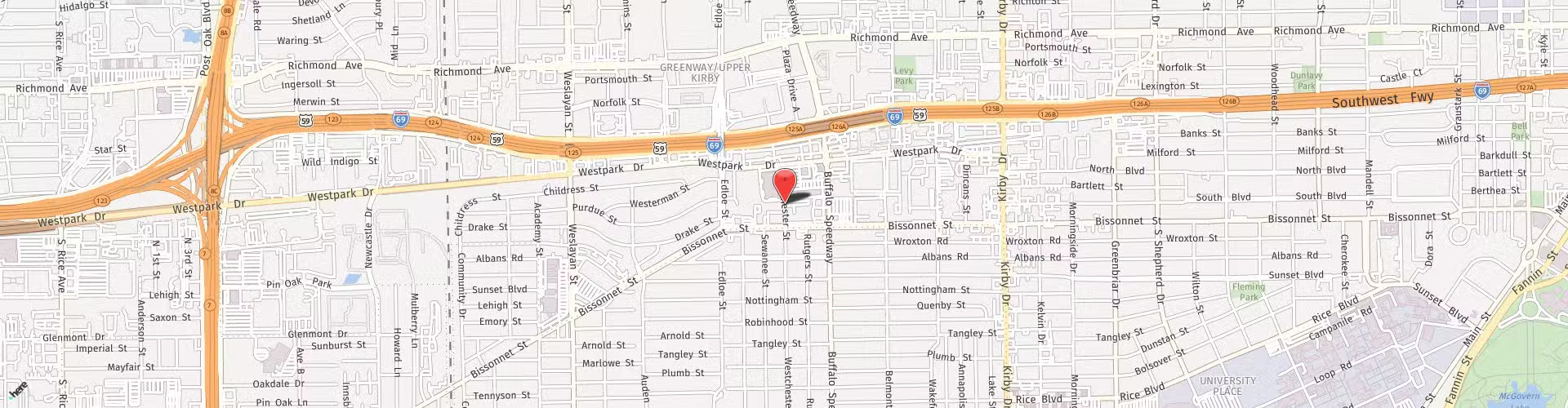
Dr. Heather Fleschler has been treating sleep apnea patients in the Houston areas of West University, River Oaks, Meyerland, and Bellaire since 2004. She can determine whether you are suffering from sleep apnea and create a customized treatment plan to provide you with the relief you need.
What Our Patients Have To Say
“Dr. Fleschler is an excellent, detail-oriented dentist! I’ve never had anyone better! She’s thorough and kind and never oversells her services. In addition, her staff: Lisa and Marcie, are amazing and friendly and extremely helpful. I recommend Dr. Fleschler to everyone/anyone!!!”
-Rabia I.
“I love Dr. Fleschler’s work, her office, and employees. I never wait long to be taken back for treatment. When I’m in the back I’m made really comfortable by her hygienist/assistant. I love this place!”
-Thresa P.
Symptoms Of Sleep Apnea
The most common symptom of sleep apnea is loud snoring. Other warning signs that you may suffer from this condition include:
- Chronic fatigue
- Daytime sleepiness
- Waking up with a choking or gasping sensation
- Reduced sex drive
- Weight gain
- Headaches in the morning
- Short term memory problems
- Difficulty concentrating
- Insomnia
- Sore throat or dry mouth
If you suffer from one or more of these symptoms, Dr. Fleschler can perform a sleep evaluation to determine whether sleep apnea is the cause.
Diagnosing Your Condition
In order to develop the proper treatment plan, Dr. Fleschler must first diagnose your condition to determine whether you are suffering from obstructive sleep apnea, which occurs when your airway becomes blocked, or central sleep apnea, which is caused by a malfunction in the brain and central nervous system.
After evaluation, we will likely include overnight monitoring at a sleep center, or possibly a home sleep test will suffice. These are the two typical tests used to detect sleep apnea:

Nocturnal Polysomnography
— At a sleep center, you are hooked up to equipment that monitors your heart, lung, and brain activity. It also records breathing patterns, arm and leg movements, and blood oxygen levels while you sleep.
Home Sleep Tests
— Testing may be able to be done at home by using portable monitoring devices. These devices provide simplified testing, usually of your heart rate, blood oxygen level, airflow, and breathing patterns.
In certain situations, Dr. Fleschler may work with a local sleep center to more accurately diagnose the cause of your condition.
Treatment Options For Mild Cases Of Sleep Apnea
If you only suffer from a mild case of sleep apnea, Dr. Fleschler may simply recommend a series of lifestyle adjustments to keep your airway open while you sleep. These often include:
- Cutting back on alcohol consumption
- Quitting smoking
- Losing weight
- Modifying your sleeping position so that you are on your side instead of your back
- Eliminating heavy meals right before bedtime
- Using additional pillows to elevate your head and facilitate breathing while you sleep
In more severe cases of sleep apnea, these lifestyle adjustments may not be effective on their own. In these situations, Dr. Fleschler may explore other treatment options as well.

Oral Appliance Therapy
With oral appliance therapy, you will wear a customized mouthpiece during sleep to maintain an open airway. These FDA-approved devices perform several important functions to prevent your soft tissue from collapsing and blocking your airway:
- Stabilize your tongue and jaw to eliminate any airway obstructions
- Reposition your soft palate, tongue, and lower jaw
- Support your muscles to help prevent a collapse of your airway
Dr. Fleschler typically prefers oral appliance therapy as her sleep apnea treatment method of choice due to the effective results that can be achieved.
CPAP
For decades, CPAP (continuous positive airway pressure) was considered the gold standard for sleep apnea treatment. It is a device that uses a mask worn over your nose and mouth to deliver a constant flow of air pressure while you sleep. This air pressure helps keep your airway open all night.
While CPAP is an effective sleep apnea treatment method, many patients find the device to be rather uncomfortable and as a result, don’t use it as often as necessary to achieve their desired results. For this reason, Dr. Fleschler will often recommend oral appliance therapy before trying CPAP.

Can Sleep Apnea Be Treated Surgically?
If sleep apnea patients don’t respond to oral appliance therapy, CPAP, or other non-surgical treatments, surgery may be necessary. Surgery is tailored to the area of obstruction in each particular patient. These areas of obstruction can be anywhere in the upper respiratory tract, including the nose, tongue, and throat. Here are the most common surgical approaches, along with brief descriptions:
Nasal Surgery
— The septum, tubinates, and the nasal valve often contribute to obstruction. Surgery may straighten out the septum and reduce the size of the turbinates. If the nasal valve is weak and tends to collapse, cartilage can be placed to strengthen it.
Uvulopalatopharyngoplasty
— This procedure is the most common surgery. It removes tissue from the soft palate and the pharynx. It will also remove the tonsils if they still remain.
Soft Palate Implants
— Three polyester rods are placed into the soft palate to stiffen it.
Hyoid Advancement
— This procedure repositions the small hyoid bone to keep the tongue from falling back and obstructing the airway.
Tongue Advancement
— This procedure involves advancing one of the main tongue muscles forward.
Tongue Base Reduction
— The base of the tongue can be reduced, either by using repeated treatment with radiofrequency waves or by excision.
Lower Jaw Advancement
— This complicated procedure achieves enlargement of the entire upper airway through the expansion of the skeletal framework that encircles the airway.
Sleep Apnea FAQs
Schedule A Consultation
To schedule a consultation or to learn more about our Sleep Apnea treatments, contact us today at 713-660-6500 or fill out an online contact form and our office will be in touch with you. Our practice serves Houston, TX and the surrounding areas.