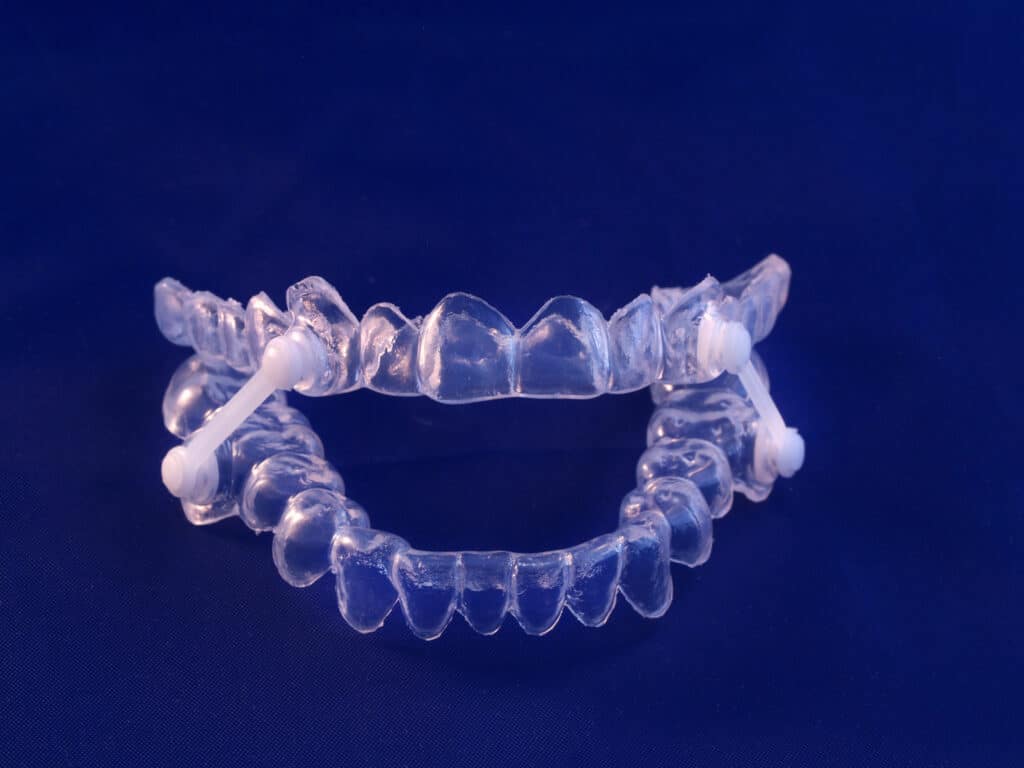
Starting oral appliance therapy can be a welcome option for patients who want a noninvasive way to manage certain forms of sleep apnea. These custom oral appliances are worn while sleeping and help support a more open airway by gently adjusting the position of the jaw.
At Heather F. Fleschler, DDS, FAGD, LVIF in Houston, TX, patients benefit from advanced training, including extensive education in diagnosing and treating sleep apnea. Knowing what to expect from an oral appliance can make the adjustment process easier and help patients feel more prepared as treatment begins.
How Is an Oral Appliance Fitted?
Oral appliance therapy begins with a dental evaluation and records of the teeth, bite, and jaw position. A custom appliance is then created to fit securely and comfortably over the teeth.
Unlike over-the-counter mouthguards, a dental sleep appliance is made specifically for the patient’s anatomy and treatment needs. Once the device is ready, the dentist checks the fit and makes adjustments as needed.
What Does the Adjustment Period Feel Like?
It can take some time to get used to sleeping with an oral appliance. During the first several days or weeks, patients may notice temporary changes such as:
- Increased saliva or a dry mouth
- Mild jaw or tooth soreness
- A feeling of pressure when the appliance is inserted
- Changes in the bite after waking
These effects often improve as the mouth and jaw adapt. Follow-up visits allow the appliance to be adjusted for comfort and effectiveness.
How Does the Appliance Help With Sleep Apnea?
For appropriate candidates, an oral appliance works by gently moving the lower jaw forward. This can help reduce airway collapse during sleep and improve airflow.
This approach is often considered when obstructive sleep apnea is mild to moderate or when a patient cannot successfully adapt to CPAP treatment. The right treatment depends on sleep apnea severity, overall health, and individual anatomy.
Why Are Follow-Up Visits Important?
Oral appliance therapy is not a one-time fitting. Periodic follow-up helps ensure the device remains comfortable, fits properly, and continues to support treatment goals.
The dentist may also monitor changes in the bite, jaw comfort, and appliance condition over time. Additional sleep testing may sometimes be used to measure how effectively the appliance is managing sleep apnea.
Start Oral Appliance Therapy for Sleep Apnea in Houston, TX
Adjusting to an oral appliance can take a little time, but proper fitting and ongoing monitoring can make the process more comfortable and effective. Patients considering this approach should be evaluated to determine whether it is appropriate for their type of sleep apnea.
Contact Heather F. Fleschler, DDS, FAGD, LVIF in Houston, TX at 713-660-6500 to schedule a consultation and learn more about oral appliance therapy for sleep apnea.